| Event type: | National and Regional Zoom Events |
| Date: | Tuesday 6th October 2026 |
| Time: | 11:00 am - 12:15 pm |
| Venue: | Zoom |
| Organiser: |
The Third Age Trust
|
| Cost: | Free |
| Booking: | Note that booking is required. |
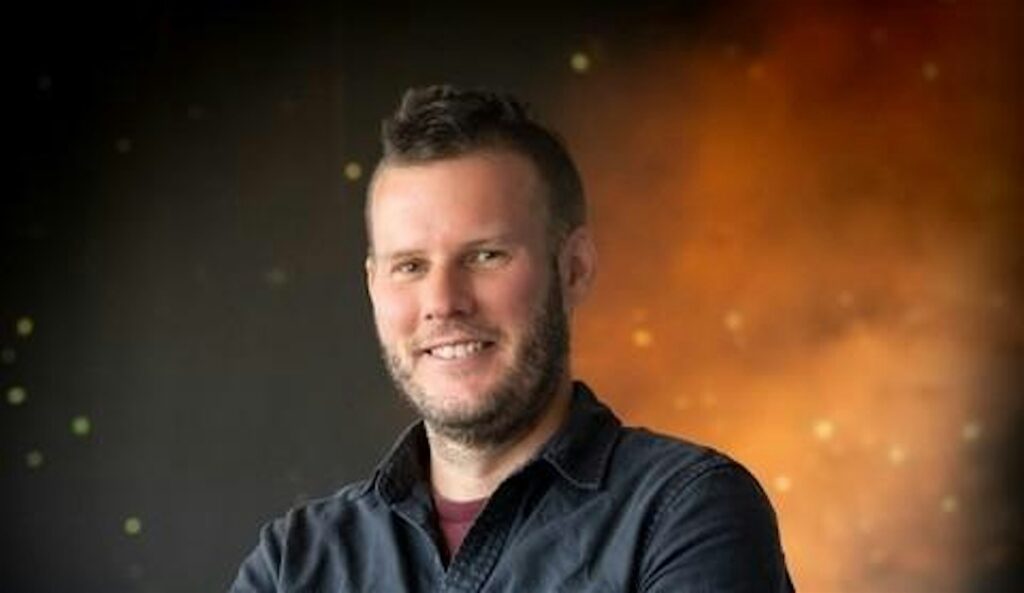
Professor Stephen Wilkins takes us to space, describing the surprises of our universe being uncovered by the James Webb Space Telescope.
This event is hosted by the u3a Science Network with speaker Professor Stephen Wilkins.
According to our current understanding, the Universe began around 14 billion years ago in an extremely hot and dense state. Initially filled with intense radiation, it expanded and cooled over time. As it did so, the Universe entered a period known as the cosmic dark ages, when no stars or galaxies had yet formed and the cosmos was largely dark. During this era, dark matter and gas, drawn together by gravity, gradually assembled into the first large-scale structures. These structures eventually collapsed to form the first stars and galaxies, bringing light back to the Universe.
Thanks to the James Webb Space Telescope (Webb), we can now observe this earliest phase of galaxy formation directly. Webb not only enables the discovery of some of the first galaxies to emerge after the Big Bang, but also provides unprecedented insight into their physical properties. Already, it has uncovered a host of surprises, including evidence for a much larger population of supermassive black holes in the early Universe than previously anticipated.
About the speaker
Professor Stephen Wilkins is Professor of Astronomy and Public Understanding of Science at the University of Sussex. Originally from Yorkshire, he studied Physics at the University of Durham, graduating with an integrated Master's degree before completing his PhD at the University of Cambridge. He subsequently held a research fellowship at the University of Oxford before joining the University of Sussex in 2013. He is currently Head of the Department of Physics & Astronomy, having previously served as Head of Astronomy for five years.
Stephen's research focuses on the formation and evolution of galaxies, particularly during the earliest stages of cosmic history. His work combines observations from some of the world's most powerful astronomical facilities - including the James Webb Space Telescope, Hubble, and Euclid - with large-scale cosmological simulations to understand how the first galaxies formed and evolved.
Alongside his research, Stephen is a passionate advocate for public engagement with science. He has delivered talks to a wide range of audiences, led exhibits at major national events, and serves as a Director of Science Projects, a science education charity that develops interactive exhibits for museums around the world. He also founded a local science education charity that delivers a programme of free events across Sussex