| Event type: | National and Regional Zoom Events |
| Date: | Thursday 1st October 2026 |
| Time: | 2:00 pm - 3:30 pm |
| Venue: | Zoom |
| Organiser: |
The Third Age Trust
|
| Cost: | Free |
| Booking: | Note that booking is required. |
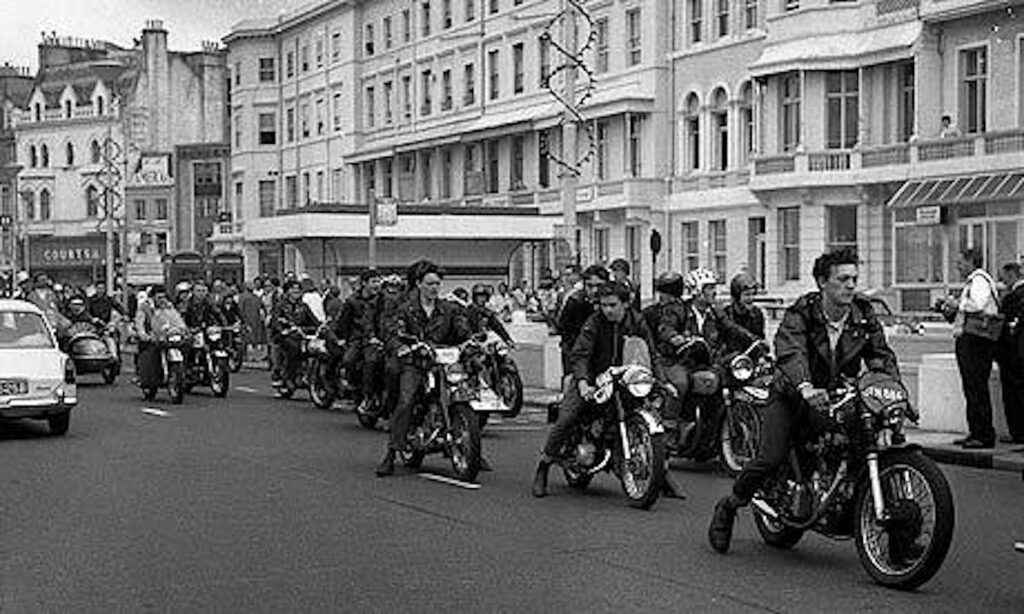
In the early 1960s, most young people defined themselves as either ‘mods’ or ‘rockers’. This talk charts the development of this phenomenon.
In the early 1960s, most young people defined themselves as either ‘mods’ or ‘rockers’. On a wet Bank Holiday weekend in 1964 thousands of them descended on the Essex seaside resort of Clacton-on-Sea. Mainly due to boredom, there were a few scuffles between the two groups and a small amount of damage was done. One lad fired a starting pistol in the air. The cost of the damage done was only slightly more than on a normal Bank Holiday weekend. Although 97 youngsters were arrested, most of them were released without charge.
Nevertheless, after the weekend, newspaper reports of these disturbances were grossly exaggerated, precipitating a chain of events that led to a ‘deviancy amplification spiral’ and the phrase ‘moral panic’ becoming a commonplace sociological description of reactions to mildly deviant youth behaviour. This talk charts the development of this particular ‘moral panic’ and looks at the wider implications of labelling deviant youth as ‘folk devils’.
Biography
Before retiring, Dr Jack Fawbert was a Senior University Lecturer and Associate Lecturer in Sociology and Criminology at several universities including Leeds Metropolitan University, De Montfort University, the University of Bedfordshire, Anglia Ruskin University and the Open University. He has also been the external examiner for Sociology at the University of Northampton and the University of Ulster. He has published numerous books, book chapters, magazine and journal articles on various sociological and criminological issues and has been a guest on BBC radio and television programmes.
Photo: Phil Sellens from East Sussex, CC BY 2.0 , via Wikimedia Commons